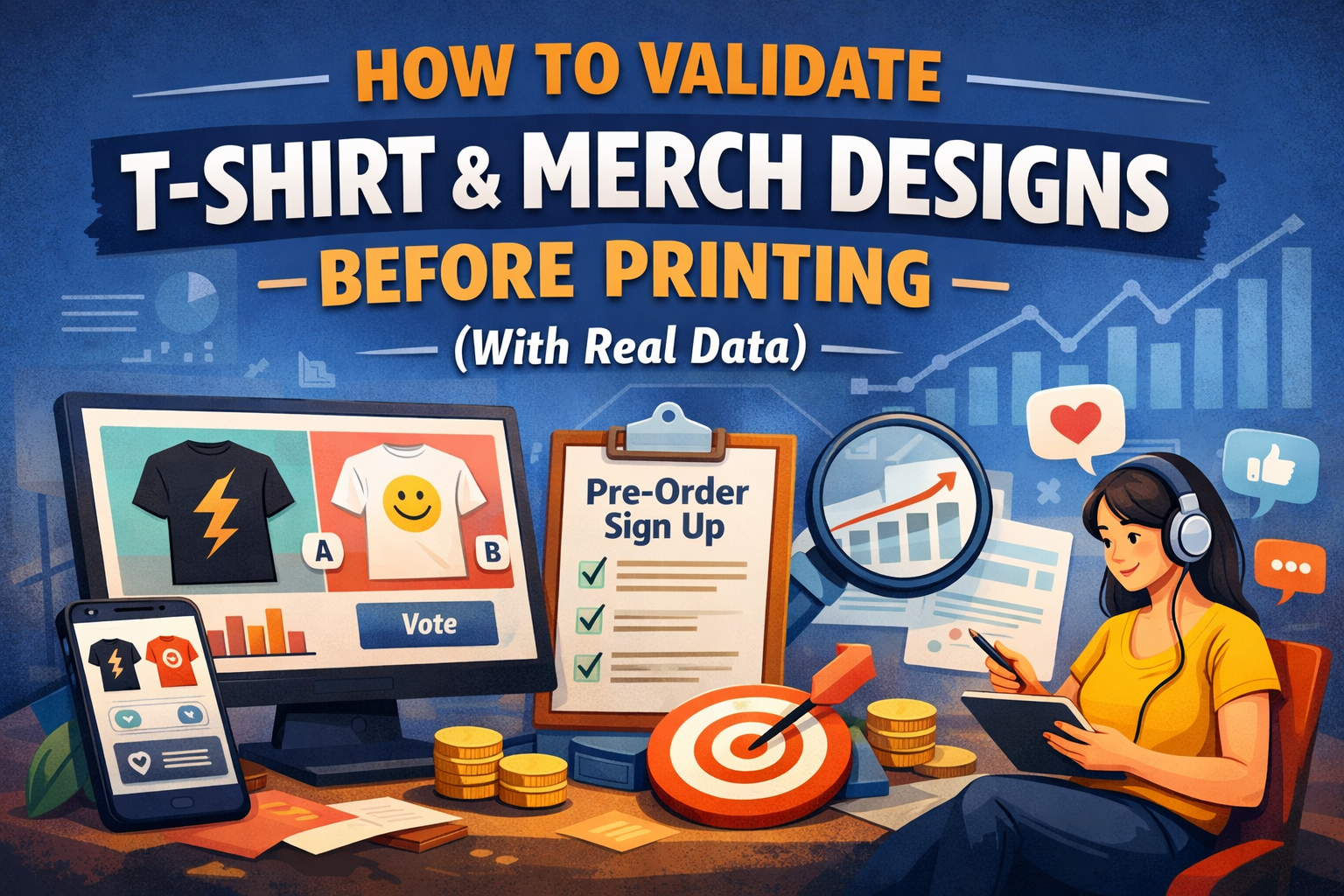
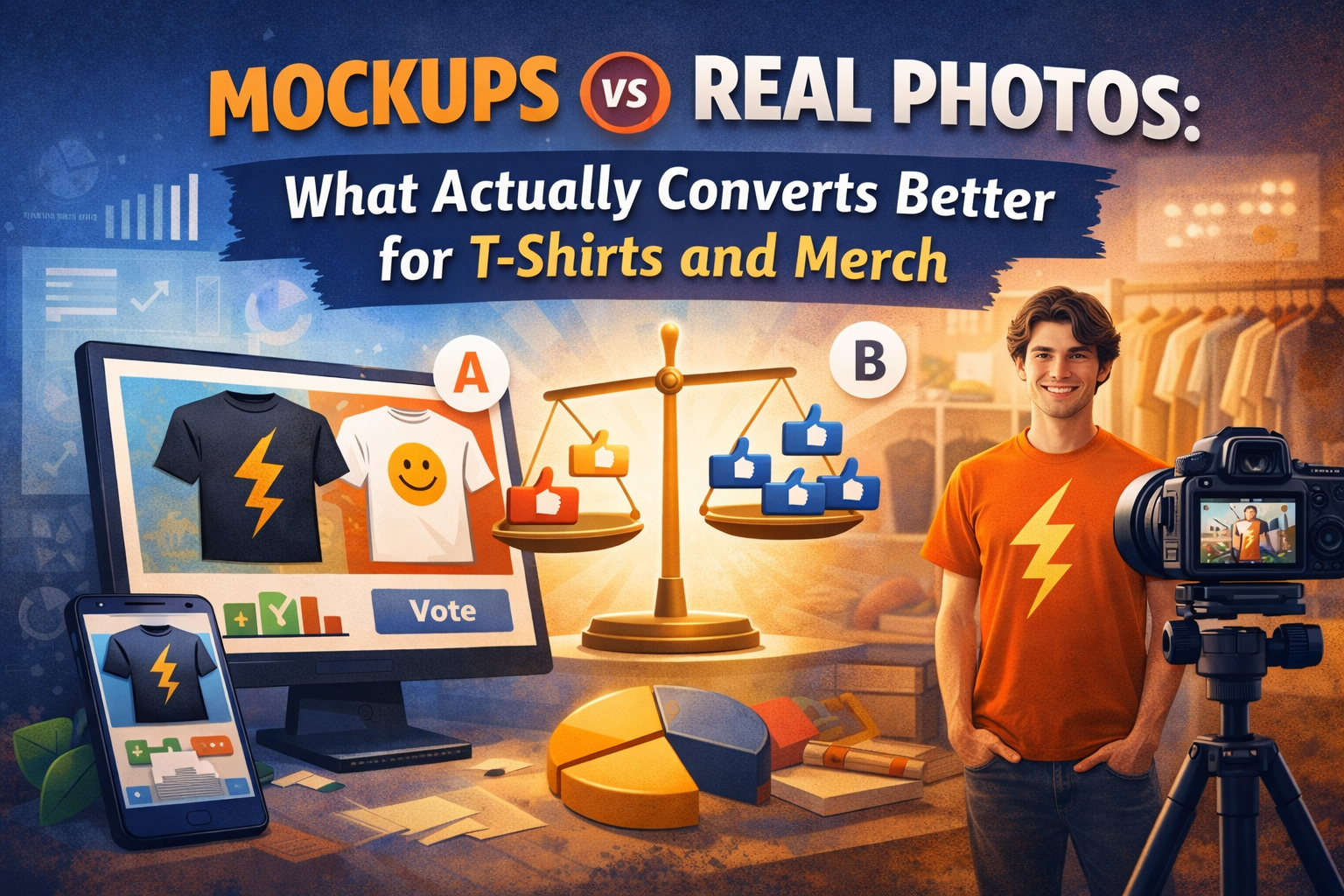
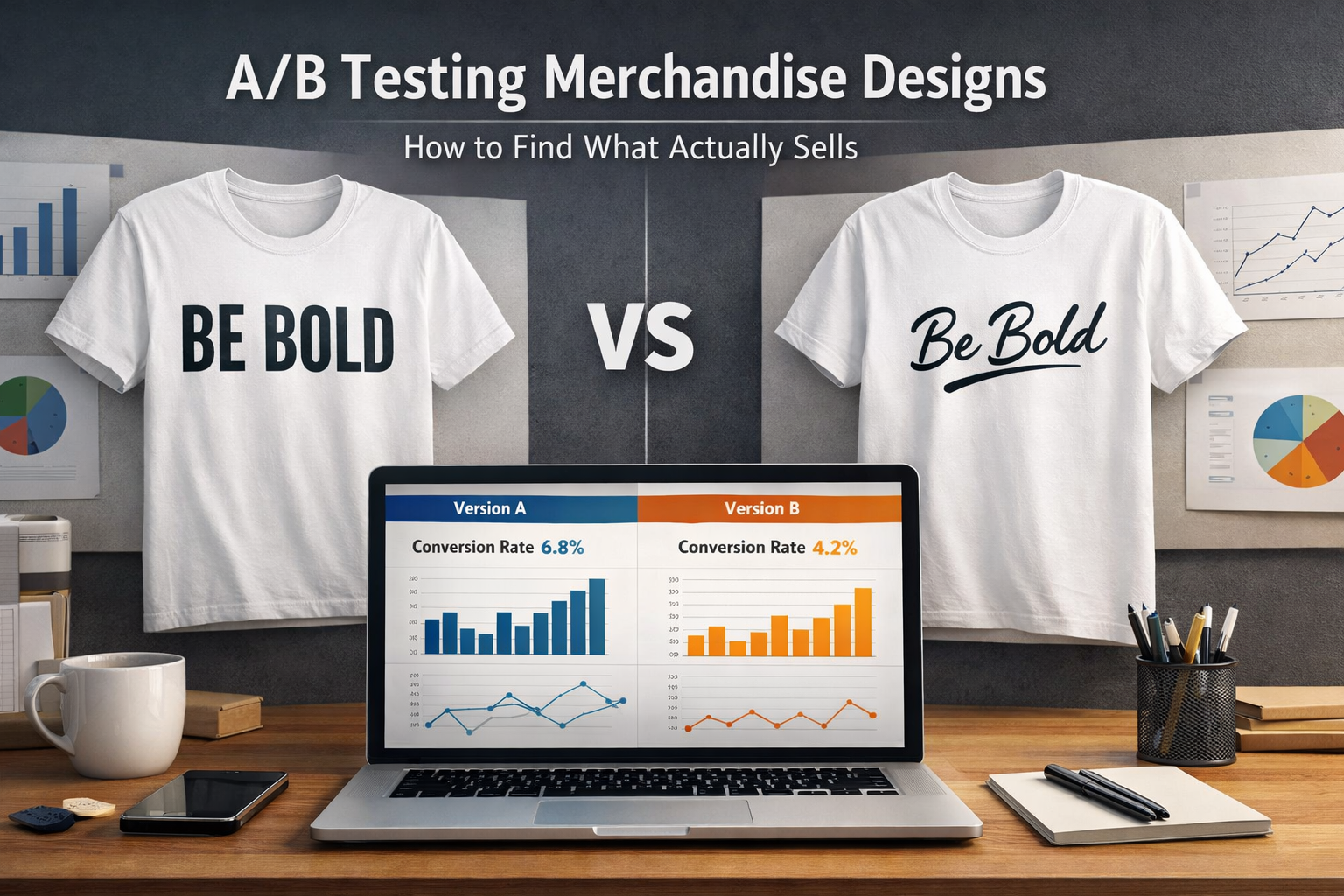
A/B Testing Merchandise Designs: How to Find What Actually Sells
⚡ Quick Answer
Run design variants on social media polls or Etsy listings (different thumbnail colours, graphic vs. text, dark vs. light shirt) and measure clicks or saves over 7–14 days. The variant with higher click-through rate wins. Commit to that design for print runs and paid ads.
Designing merchandise is not about guessing what looks good. It is about understanding what your audience is willing to buy. Many creators and brands fail at merch not because their designs are bad, but because they never test them.
A/B testing merchandise designs helps you replace opinions with data. It shows you what works before you invest heavily into production, marketing, or inventory.
In this guide, you will learn exactly how to A/B test merch designs effectively using simple methods that real brands use to increase conversions and revenue.
What Is A/B Testing in Merchandise Design?
A/B testing means comparing two versions of a design to see which one performs better with real users.
For merchandise, this usually means testing things like:
- Two different t-shirt designs
- Same design with different colors
- Different font styles or text placement
- Minimal design versus detailed illustration
- Front print versus back print emphasis
You show Version A to one group of users and Version B to another group. Then you compare results based on clicks, orders, or engagement.
The design that performs better wins.
Why A/B Testing Is Critical for Selling Merch
Merch is emotional buying. Small visual changes can drastically impact whether someone clicks "Buy Now" or scrolls away.
Here is why A/B testing matters:
- Reduces Risk: You avoid investing in designs that do not sell.
- Improves Conversion Rates: Winning designs can increase sales without more traffic.
- Reveals Audience Preferences: You learn what your audience actually likes, not what you assume.
- Scales Smarter: Data-backed designs are easier to scale with ads and influencer promotions.
If you want predictable merch revenue, A/B testing is not optional.
What You Should A/B Test for Merchandise
Not everything needs testing, but certain elements have a big impact on sales.
Design Style
Test illustration vs. typography-only designs. Test minimal vs. bold graphics.
Color Variations
The same design in black vs. white vs. pastel colors can have very different performance.
Placement
Center chest vs. pocket style vs. oversized print.
Product Type
Same design on a t-shirt vs. hoodie vs. oversized tee.
Price Points
Test two price ranges to see where demand drops.
Tip: You should test one variable at a time. Testing multiple changes together makes results unclear.
How to Run an A/B Test for Merch (Step by Step)
Step 1: Create Two Clear Variants
Design Version A and Version B should be similar with only one meaningful difference. For example: same design, different color OR same quote, different font. Avoid testing wildly different concepts together.
Step 2: Show Both Designs to Equal Traffic
You can do this through:
- Instagram Story polls
- Website product pages with split traffic
- Paid ads with equal budgets
- Email campaigns with segmented lists
The goal is to give both versions a fair chance.
Step 3: Choose the Right Success Metric
Do not rely only on likes or comments. The best metrics are:
- Click-through rate (CTR)
- Add to cart rate
- Actual purchases
- Revenue per visitor
Engagement is helpful, but sales matter most.
Step 4: Run the Test Long Enough
Do not stop testing after a few hours. Let the test run until you get meaningful data. This could be a few hundred visits or at least several days depending on your traffic.
Step 5: Pick the Winner and Iterate
Once you find a winning design:
- Use it as your main product
- Create variations based on the winning elements
- Retire poor performers
A/B testing is a loop, not a one-time task.
Common Mistakes to Avoid When A/B Testing Merch
Many brands test incorrectly and draw wrong conclusions. Avoid these mistakes:
- Testing too many changes at once
- Stopping tests too early
- Relying only on likes instead of sales
- Ignoring mobile experience
- Not considering seasonality or trends
Clean testing gives clean results.
How MerchBanao Helps You A/B Test Smarter
With MerchBanao, creators and businesses can easily experiment without heavy upfront costs.
You can:
- Launch multiple design variants quickly
- Test designs using real store traffic
- Avoid inventory risk with print-on-demand
- Iterate designs fast based on performance
This makes it easier to test ideas before scaling them through ads or influencer campaigns.
Real Example of A/B Testing Done Right
A creator launched two hoodie designs with the same quote.
- Version A had bold block typography.
- Version B used handwritten script.
After testing with equal traffic for one week:
- Version B got fewer likes.
- Version A generated 42% more sales.
Without A/B testing, the creator would have picked the wrong design based on engagement alone.
When Should You Start A/B Testing Your Merch?
You should start testing when:
- You are launching a new merch collection
- Sales feel inconsistent
- You want to scale paid ads
- You are unsure which design direction to take
Even small creators benefit from testing early.
Final Thoughts
A/B testing turns merchandise from a gamble into a system.
The best-selling designs are rarely accidents. They are tested, refined, and backed by data. If you want consistent merch revenue, you need to test designs the same way you test ads or landing pages.
With the right tools and mindset, A/B testing becomes simple, powerful, and repeatable.
Start small, test smart, and let your audience decide what sells.