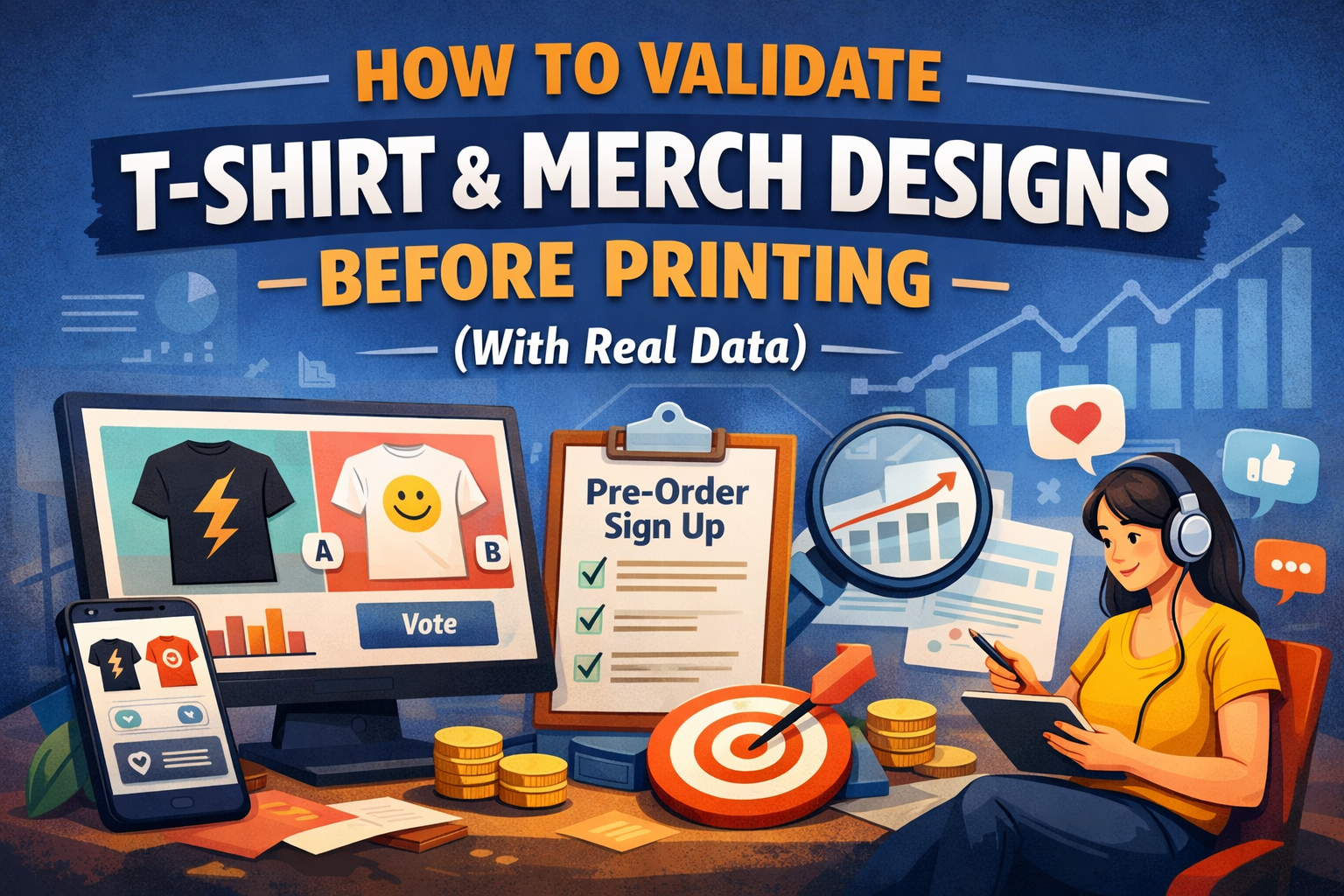
How to Validate T-Shirt and Merch Designs Before Printing (With Real Data)
⚡ Quick Answer — 3 fastest validation methods
- Instagram poll — post two design mockups in a story, ask "Which would you wear?". 24-hour data, zero cost.
- Etsy draft listing — upload the design as a live listing at full price. Track views and favourites over 7 days before printing anything.
- Pre-order page — sell the design before printing. If it doesn't hit 5 orders in 2 weeks, it's not worth the run.
Printing merchandise without validation is one of the fastest ways to lose money. A design might look great on your screen, but that does not guarantee people will actually buy it.
Before committing to bulk printing, it helps to test your ideas in small, measurable ways. Validation is about reducing guesswork and making decisions based on real signals, not opinions from a small circle.
This guide walks through practical ways to validate merch designs before production, using data you can trust.
Start by defining what you are testing
Not every test needs to answer the same question. Be clear about what you want to learn before sharing a design.
Some common validation goals include:
- Whether the design concept is appealing
- If the message or visual is clear
- How the style matches your target audience
- Whether the design feels worth paying for
If you do not define the goal, feedback becomes vague and hard to act on.
Test designs where your audience already exists
You do not need complex tools to get early feedback. Simple exposure to the right people can reveal a lot.
Ways to do this effectively:
- Post multiple design options on social media and ask which one people would buy
- Use Instagram story polls for quick comparisons
- Share short videos showing mockups and track comments and saves
Engagement patterns often tell you more than direct answers. A design that gets shared or saved usually has stronger appeal.
Use small paid tests to measure intent
Organic feedback is useful, but paid traffic adds another layer of validation. Even a small ad budget can help you understand real interest.
A simple setup works well:
- Create mockups of two or three designs
- Send traffic to a basic landing page or email signup
- Track which design gets the most clicks or signups
You are not trying to make sales yet. You are measuring intent. If people click and take action, the design is doing its job.
Validate with pre orders or waitlists
Pre orders are one of the strongest validation signals because they involve commitment.
You can test this by:
- Creating a pre order page with a future delivery date
- Offering a limited discount or early access
- Promoting it through your existing channels
If people are willing to wait for the product, it usually means the design resonates.
Ask for feedback in relevant communities
Niche communities often provide more honest feedback than general audiences.
Good places to look include:
- Reddit communities related to your niche
- Discord servers or private groups
- Forums built around fashion, fitness, gaming, or streetwear
Ask specific questions instead of asking if they like the design. For example, ask what they would change or what made them hesitate.
Track signals that actually matter
Likes alone are not enough. Focus on signals that show real interest.
Key metrics to watch:
- Click through rate on design images
- Email signups or waitlist joins
- Comments that explain why people like or dislike a design
- Cost per click or signup in paid tests
When multiple signals point in the same direction, you have a reliable insight.
Iterate before you print
Validation works best when you treat designs as flexible. If something underperforms, adjust and test again.
Small changes often make a big difference:
- Color combinations
- Text placement or font choice
- Graphic size and positioning
Testing iterations is cheaper than printing inventory that does not sell.
Final thoughts
Validating merch designs before printing helps you avoid expensive mistakes. By testing with real audiences and tracking clear signals, you move from guessing to informed decision making.
When you finally print, you are no longer hoping the design works. You already know it does.