T-Shirt Mockups vs Real Photos: What Should You Test?
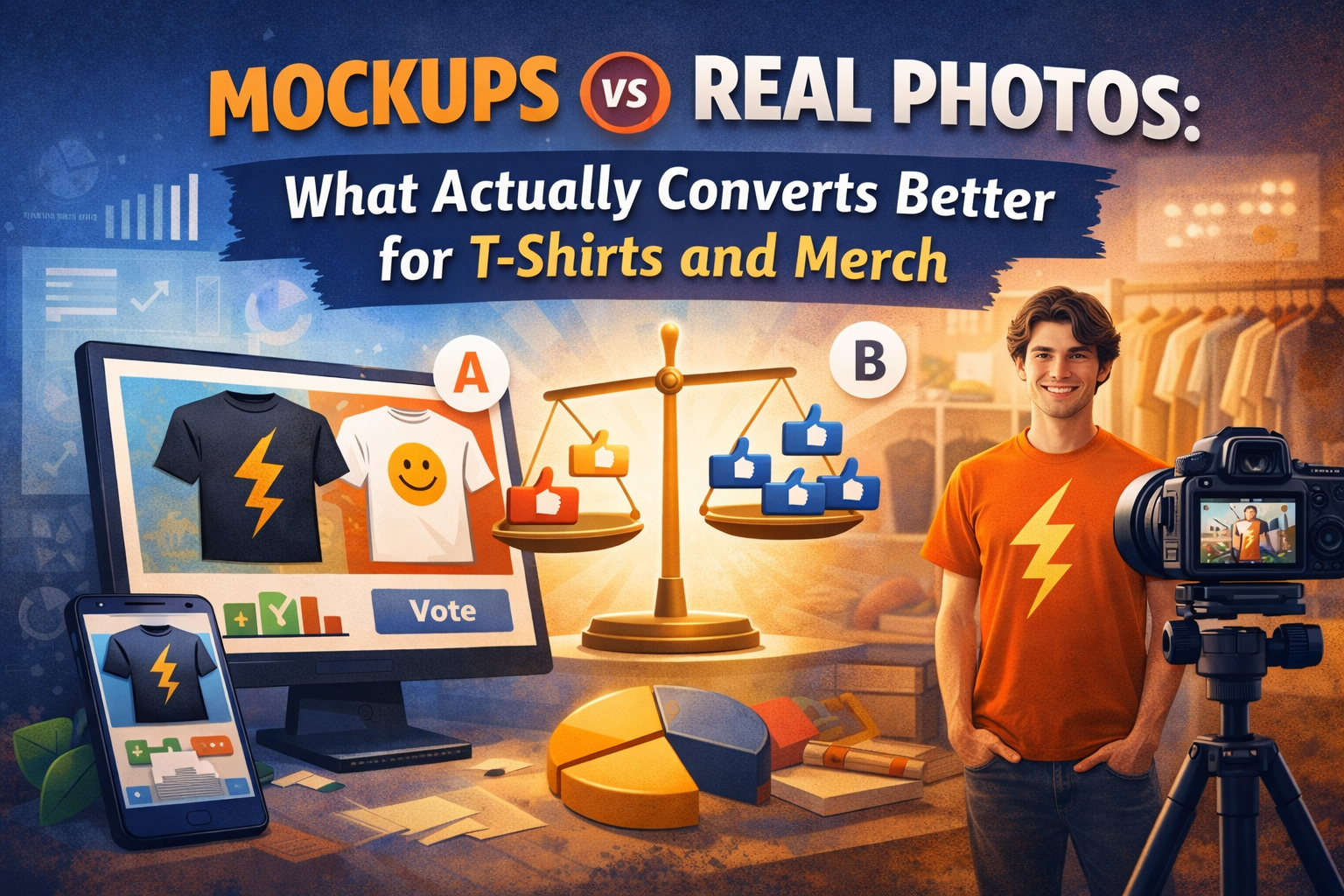
Short answer: neither image type is a universal conversion winner. A mockup shows the planned composition. A real photo shows evidence about the finished product. Channel rules, image accuracy, and your own controlled purchase test should decide which image leads the listing.
The old rule of thumb that mockups win clicks while real photos win purchases sounds useful, but it is not a result you can safely apply to every store. A polished mockup can beat a weak phone photo. A clear sample photo can expose details a rendering cannot. Product, price, audience, traffic source, and image quality all change the result.
Start by separating two questions:
- Is the image allowed and accurate on this channel?
- For eligible images, which one improves completed purchases for this listing?
Policy comes first. Testing comes second.
What a mockup can and cannot prove
A T-shirt mockup places artwork onto a digital garment or model scene. It is useful for checking composition before ordering a sample and for producing consistent secondary images across a collection.
A mockup can show:
- approximate artwork scale and position;
- a planned shirt and design colour combination;
- a lifestyle or studio context;
- several concept directions without photographing every draft.
It cannot prove the actual garment colour, print texture, ink opacity, fabric hand, fit, edge quality, packaging, or wash result. It may also mislead buyers when the garment cut, folds, artwork distortion, or print size differs from the product they receive.
Label a concept image when a reasonable buyer could mistake it for a photograph. More importantly, make the mockup match the exact blank, colour, print area, and artwork placement used for fulfilment.
What a real sample photo can and cannot prove
A real photo records one physical sample under one lighting setup. It can show details that no template can verify:
- how the print sits on the actual garment;
- the visible fabric, seams, collar, and cut;
- close detail around fine lines and transparent edges;
- the scale of the product on a person or beside a familiar object;
- packaging and the item as it arrived.
One sample photo still does not prove every size and colour will be identical. Lighting and editing can shift colour, while print placement can vary within a provider's tolerance. Name the photographed variant and avoid editing that makes the item look different from the sample.
Order the exact product before you scale a listing. Photograph it before washing, follow its care instructions, and inspect it again after normal use.
Etsy's current image rules matter more than a slogan
Etsy's Seller Policy is effective July 9, 2026. It generally requires a seller's own photographs or video, not stock photos or artistic renderings, while pointing to limited exceptions for custom items and products made with production partners. The policy also requires production-partner disclosure and accurate representation of the item.
Etsy's current guidance makes the practical direction clearer:
- The marketplace recommends showing the actual physical item first, not a rendering or stock photo.
- For personalized commercial items, the primary image must show a finished personalized item, not a blank item or “Your Text Here” placeholder. Mockups can appear in additional images to explain options.
- A listing can currently include up to 20 photos and two short videos.
Do not treat an old blog post or another seller's listing as policy approval. Check the live rule for your listing type, use your own eligible imagery, disclose the production partner, and describe what the buyer will actually receive.
Google Shopping expects the main image to show the product
Google Merchant Center's main image specification says the image should accurately show the entire product with minimal or no staging. It rejects generic illustrations that are not the actual product image for ordinary apparel listings and tells sellers to match the correct colour, pattern, material, and variant.
Google also recommends showing apparel worn by a person, while keeping the product as the focus. A product feed supports one main image and up to 10 additional images, which gives you room for detail, fit, lifestyle, and alternate views without asking one hero image to do every job.
The lesson is not “never use a mockup.” It is that a beautiful scene cannot compensate for an inaccurate product representation or a feed image that breaks the channel's rules.
Build a gallery that answers buying questions
For an established T-shirt listing, use a real sample as the evidence layer and accurate mockups only where they add a view you have not photographed. A useful gallery can follow this order:
- Clear hero image of the exact product and artwork.
- Full front view with realistic print scale.
- Close photo of print detail and fabric.
- On-body or measured view that communicates fit and length.
- Back or side view when relevant.
- Accurate colour variants, clearly labelled.
- Size chart tied to the named blank.
- Care, packaging, or production detail.
- Short silent video showing the physical item in normal light.
Do not fill every slot with the same front view. Each image should answer a different buyer question.
For a design still in development, use a mockup privately to check composition, then order the likely winner. A click on an unfulfillable concept is not useful demand.
How to test mockup vs real photo correctly
Test only images that comply with the channel's rules. Then write the hypothesis before looking at results:
Because buyers may be uncertain about the real print and garment, we believe replacing the mockup hero with a photo of the exact sample will increase completed purchase rate for eligible product-page visitors. We will keep the offer and gallery unchanged and monitor refunds as a guardrail.
Use this setup:
| Test element | Decision |
|---|---|
| Control | Current eligible hero image |
| Variant | One real sample photo or one accurate mockup |
| Traffic | 50/50 random split |
| Consistency | Keep a returning visitor in the same variant |
| Primary metric | Completed purchases ÷ eligible product-page visitors |
| Secondary metrics | Add-to-cart rate, image-gallery use |
| Guardrails | Refunds, image-related support contacts, page speed |
| Fixed variables | Price, copy, offer, audience, traffic source, gallery order |
Calculate the required sample before launch using your baseline purchase rate and the smallest lift worth detecting. Run through full weekly cycles. Do not stop when one version briefly moves ahead, and do not change the image halfway through the test.
Low-traffic shops may not reach a useful sample quickly. In that case, collect structured buyer interviews and support questions, inspect search and add-to-cart behaviour, and treat the result as directional rather than “statistically proven.”
Pre-publish image checklist
- The image is permitted for the channel and listing type.
- It shows the exact garment, colour, artwork, and variant being sold.
- The artwork scale matches the provider's product creator.
- The thumbnail remains readable on a small screen.
- The crop leaves enough room for marketplace interfaces.
- Real photos are colour-corrected without changing the product.
- Mockups do not invent print texture, folds, or details.
- Size, material, fulfilment, and production-partner details are accurate.
- A physical sample has been inspected before meaningful ad spend.
- The test changes one image variable and has a pre-set decision rule.
Use MerchBanao's T-shirt mockup preview to catch obvious placement issues while editing. Then use the print-on-demand design workflow to check the product template, the print-ready T-shirt guide before ordering, and the POD sample checklist when the item arrives.
The practical answer
Use a mockup as a planning and presentation tool, not as proof of the finished item. Use real sample photos to show what arrived, within the limits of one photographed variant. On marketplaces, follow the current image rules before testing. On a store you control, test one compliant hero-image change against completed purchases and keep the rest of the offer fixed.
That produces a decision you can defend. “Real photos always win” and “mockups are good enough” do not.